Beginner Crochet Series
Welcome to the Beginner Crochet Live Series
Learning to crochet is about so much more than making beautiful projects. It's about slowing down, embracing the learning process, and discovering the joy that comes from creating something with your own two hands.
Whether you've never picked up a crochet hook before or you're returning after years away, you're in the right place.
Every Tuesday, we will release a new video designed to help you to learn a new crochet skill together, one stitch at a time. Each lesson builds on the last, helping you develop confidence, improve your technique, and create a strong foundation for every project to come.
Here you'll find the link to the lesson, a written recap of the techniques we covered, helpful tips, practice suggestions, and links to continue your crochet journey.
Remember, progress is always more important than perfection. Every crocheter starts with a single loop, a single stitch, and a willingness to keep trying. Be patient with yourself, celebrate each small victory, and enjoy the process.
I'm so glad you're here, and I can't wait to crochet alongside you each week.
Let's pick up our hooks and get started!
Beginner Crochet Live Replay: Grip, Slip Knot & Foundation Chain
June 30, 2026
Every crochet journey begins with a single loop.
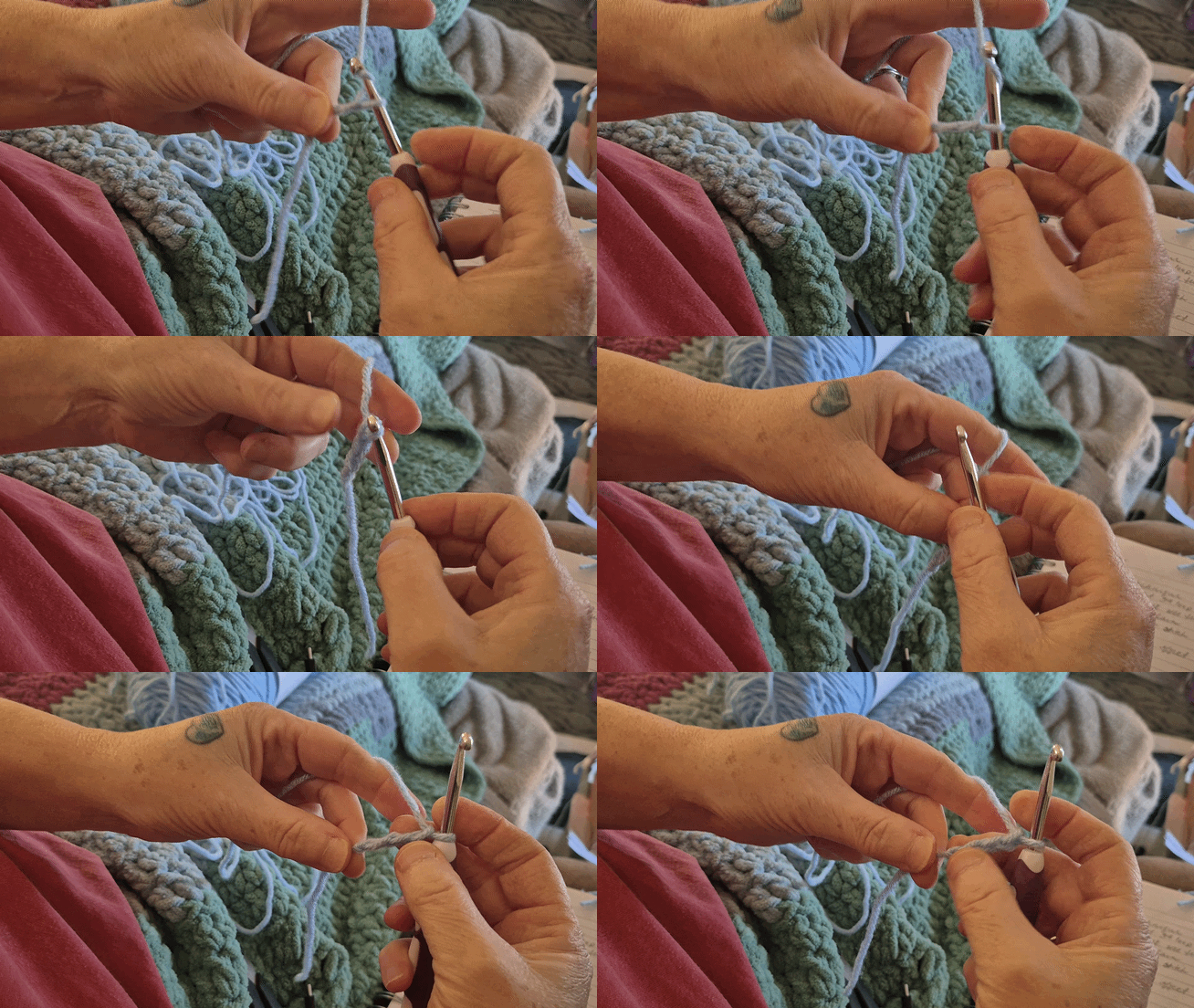
During this week's Beginner Crochet, we focused on the three foundational skills every crocheter needs before making their first project: finding a comfortable grip, creating a slip knot, and crocheting a foundation chain.
If you're brand new to crochet, don't worry if these first steps feel a little awkward. Every experienced crocheter started exactly where you are today. The more you practice, the more natural these movements will become.
What Is Covered
Finding Your Grip
One of the biggest surprises for new crocheters is discovering there isn't one "correct" way to hold your hook or yarn.
We talked about different ways to hold your crochet hook and how to manage your yarn tension comfortably. The best grip is the one that allows you to crochet without pain or excessive strain.
Remember:
Relax your shoulders.
Keep your hands loose.
Take breaks when needed.
Your grip may change as you gain experience, and that's perfectly normal.
Making a Slip Knot
The slip knot is the very first stitch of nearly every crochet project.
We practiced making a slip knot that is snug enough to stay on the hook but loose enough to slide easily. If yours doesn't look perfect yet, don't worry. This simple knot becomes second nature with repetition.
Crocheting the Foundation Chain
Your foundation chain creates the base for almost every crochet project.
We practiced:
Keeping an even rhythm.
Making chains that are loose enough to work into later.
Recognizing what a finished chain should look like.
Avoiding overly tight tension.
Don't focus on speed.
Instead, focus on creating chains that are consistent in size. Even chains make every project easier as you continue learning.
Beginner Crochet Series
✅ Lesson 1: Grip, Slip Knot & Foundation Chain (Current Lesson)
⬜ Lesson 2: Single Crochet
⬜ Lesson 3: Half Double Crochet
⬜ Lesson 4: Double Crochet
⬜ Lesson 5: Half Double Crochet Increase & Decrease
⬜ Lesson 6: Double Crochet Increase & Decrease
⬜ Lesson 7: Reading Crochet Patterns
⬜ Lesson 8: Stitch Markers & Counting Stitches
⬜ Lesson 9: Crochet in the Round
⬜ Lesson 10: Your First Granny Square
⬜ Lesson 11: Joining Granny Squares
⬜ Lesson 12: Finishing Techniques.
Practice for This Week
Before our next Beginner Crochet Series video, spend a little time practicing:
Make several slip knots until they feel comfortable.
Chain 25 stitches.
Undo your work.
Repeat several times.
This simple exercise helps build muscle memory and confidence without worrying about making mistakes.
Remember, every chain you crochet is helping your hands learn a new skill.
Watch the video
If you would like to practice along again, you can watch the full replay here.
Keep Going
Crochet isn't about perfection—it's about progress.
Every stitch teaches your hands something new. Every practice session builds confidence. Be patient with yourself, celebrate the small victories, and remember that every beautiful blanket, plushie, and granny square started with a single slip knot and one chain.
I'm so glad you're learning alongside me, and I can't wait to see your progress. Be sure to share a photo of your practice chains in The Hook Nook Community or leave a comment below. I'd love to cheer you on!
Happy crocheting!
🧶 Melissa
Naturally, MelissaMade
Beginner Basics Recap: The Single Crochet (SC)
July 7, 2026
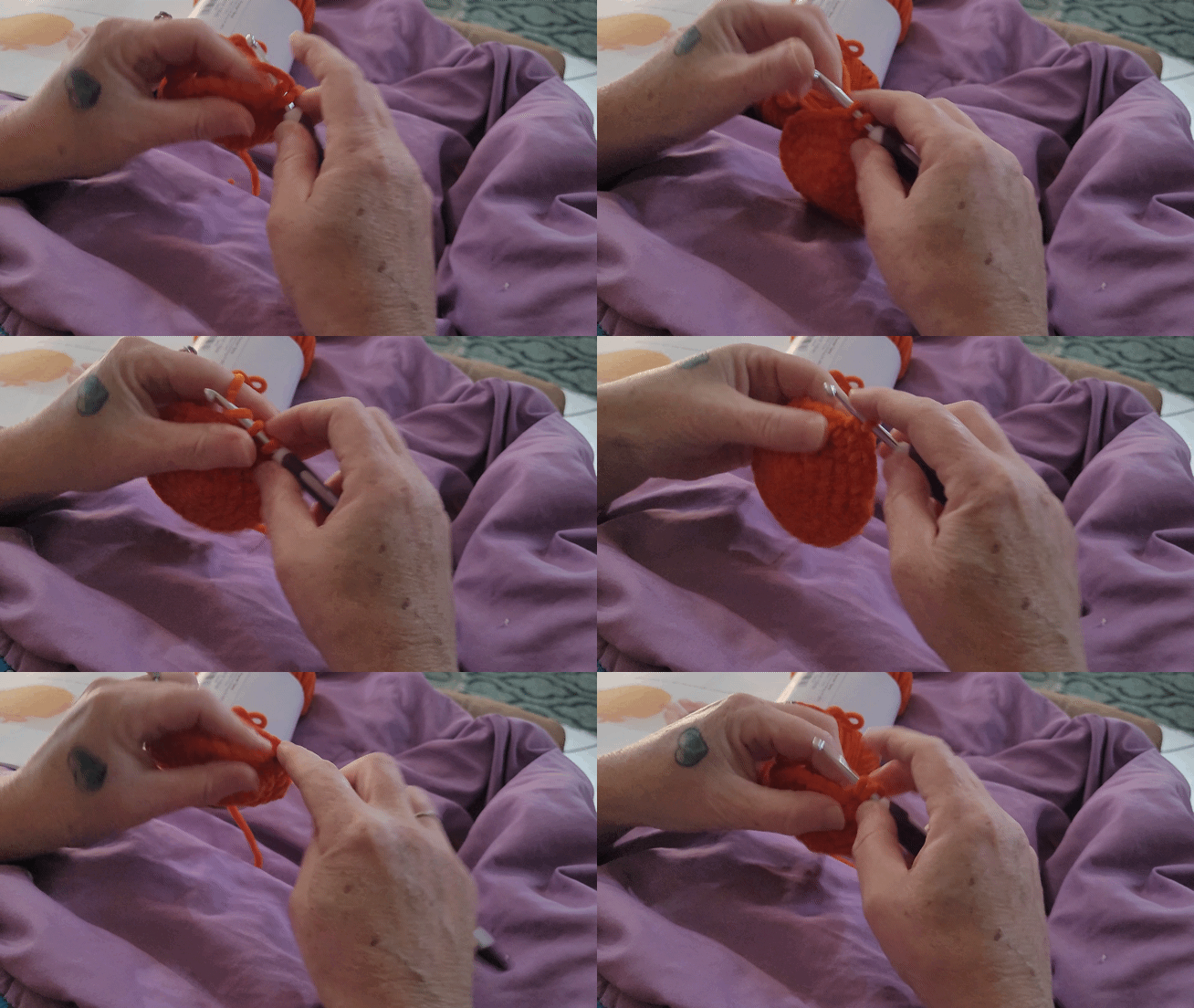
This week in Beginner Basics, we focused on one of the most important stitches in crochet: the Single Crochet (SC).
Mastering this stitch opens the door to countless projects, from plushies and dishcloths to blankets, baskets, and more.
What Is Covered
Understanding the Single Crochet
What the abbreviation SC means in patterns.
Where to insert your hook.
The steps to complete a single crochet stitch.
How the finished stitch should look.
Maintaining Consistent Tension
Holding your yarn comfortably.
Keeping stitches even from row to row.
Tips for avoiding stitches that are too tight or too loose.
Turning Your Work
When and why to use a turning chain.
How to begin the next row without stretching the edge.
Keeping the sides of your project straight.
Counting Your Stitches
How to identify the first and last stitch of each row.
Why counting every row helps prevent accidental increases and decreases.
Tips for using stitch markers to keep your place.
Common Beginner Mistakes
Accidentally adding extra stitches.
Missing the last stitch in a row.
Pulling loops too tightly.
Ways to recognize and correct mistakes before they become bigger problems.
Beginner Crochet Series
✅ Lesson 1: Grip, Slip Knot & Foundation Chain (Current Lesson)
✅ Lesson 2: Single Crochet
⬜ Lesson 3: Half Double Crochet
⬜ Lesson 4: Double Crochet
⬜ Lesson 5: Half Double Crochet Increase & Decrease
⬜ Lesson 6: Double Crochet Increase & Decrease
⬜ Lesson 7: Reading Crochet Patterns
⬜ Lesson 8: Stitch Markers & Counting Stitches
⬜ Lesson 9: Crochet in the Round
⬜ Lesson 10: Your First Granny Square
⬜ Lesson 11: Joining Granny Squares
⬜ Lesson 12: Finishing Techniques.
Practice for This Week
Practice creating a small swatch using only single crochet. Focus on:
Keeping your stitch count the same in every row.
Maintaining even tension.
Creating straight edges.
Building confidence through repetition.
Remember, every crocheter starts exactly where you are today. Don't worry about perfect stitches. Focus on making consistent progress, and with every row, your confidence and skills will continue to grow.
Watch the Video
If you would like to practice along, you can watch the full replay here.
Keep Going
Crochet isn't about perfection—it's about progress.
Every stitch teaches your hands something new. Every practice session builds confidence. Be patient with yourself, celebrate the small victories, and remember that every beautiful blanket, plushie, and granny square started with a single slip knot and one chain.
I'm so glad you're learning alongside me, and I can't wait to see your progress. Be sure to share a photo of your practice chains in The Hook Nook Community or leave a comment below. I'd love to cheer you on!
Happy crocheting!
🧶 Melissa
Naturally, MelissaMade
Beginner Basics Recap: The Half Double Crochet (HDC)
July 14, 2026
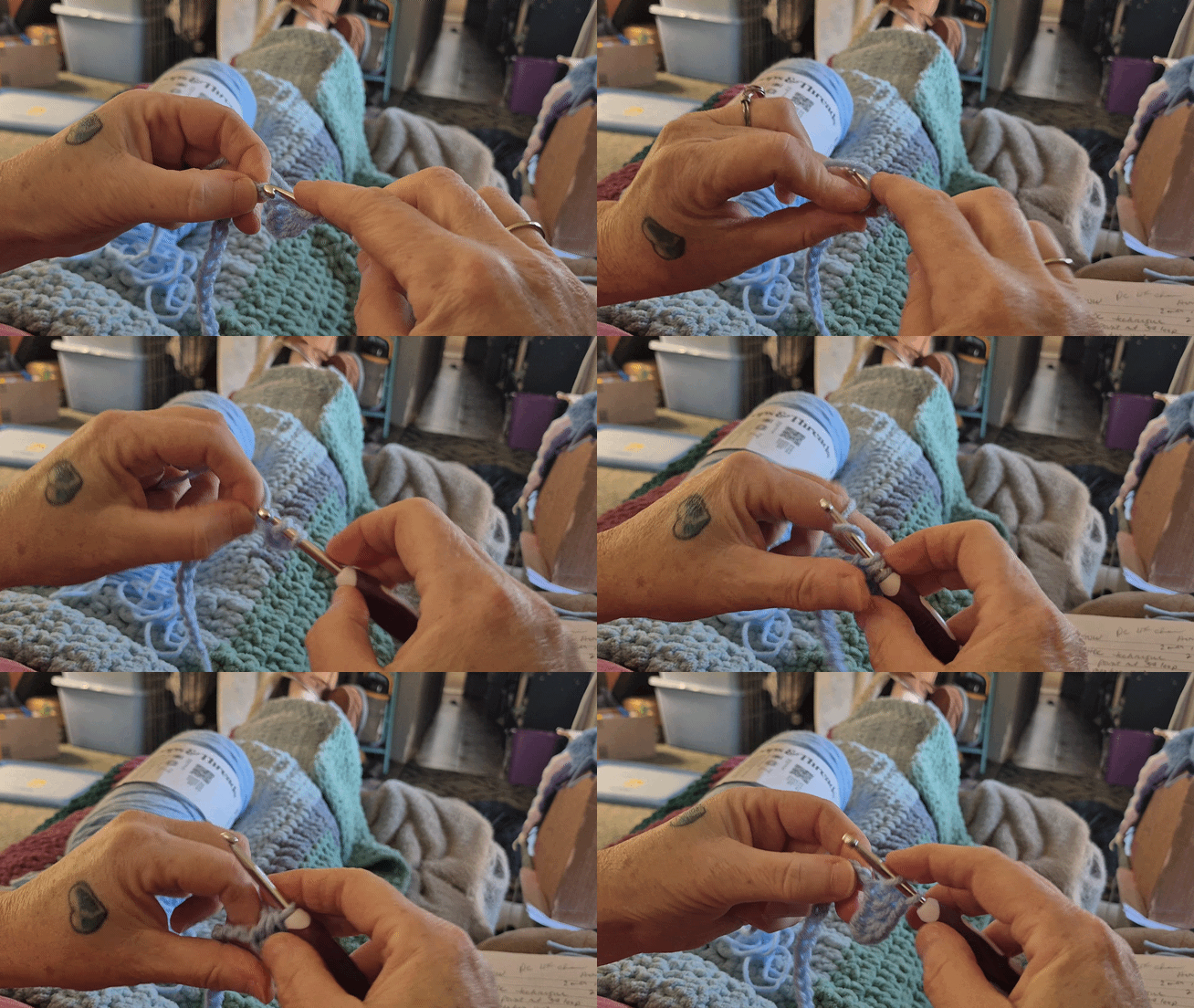
This week in Beginner Basics, we learned the Half Double Crochet (HDC).
Sitting right between the single crochet and the double crochet in height, the half double crochet creates a soft, slightly textured fabric that works beautifully for blankets, hats, scarves, and so much more.
What Is Covered
Getting to Know the Half Double Crochet
What the abbreviation HDC means in crochet patterns.
How the half double crochet differs from the single crochet and double crochet.
The anatomy of the stitch and what it should look like when finished.
Working the Stitch
Yarn over before inserting your hook.
Inserting the hook into the next stitch.
Pulling up a loop so you have three loops on your hook.
Yarn over again and pulling through all three loops at once.
Building Consistent Tension
Keeping your yarn overs loose enough to work comfortably.
Making each stitch the same height.
Finding a rhythm that helps create even rows.
Turning Your Work
How to begin a new row with the appropriate turning chain.
Finding the first stitch of the row.
Keeping your edges neat and straight.
Counting Your Stitches
Identifying the top "V" of each half double crochet.
Counting stitches at the end of every row.
Using stitch markers if needed to help keep track of the first and last stitches.
Common Beginner Challenges
Forgetting the first yarn over.
Pulling through only two loops instead of all three.
Missing the last stitch in the row.
Uneven stitch height caused by inconsistent tension.
Beginner Crochet Live Series
✅ Lesson 1: Grip, Slip Knot & Foundation Chain (Current Lesson)
✅ Lesson 2: Single Crochet
✅ Lesson 3: Half Double Crochet
⬜ Lesson 4: Double Crochet
⬜ Lesson 5: Half Double Crochet Increase & Decrease
⬜ Lesson 6: Double Crochet Increase & Decrease
⬜ Lesson 7: Reading Crochet Patterns
⬜ Lesson 8: Stitch Markers & Counting Stitches
⬜ Lesson 9: Crochet in the Round
⬜ Lesson 10: Your First Granny Square
⬜ Lesson 11: Joining Granny Squares
⬜ Lesson 12: Finishing Techniques.
Practice for This Week
Practice crocheting a small swatch using only half double crochet.
As you practice, focus on:
Creating even, consistent stitches.
Keeping the same stitch count in every row.
Maintaining straight edges.
Becoming comfortable with the rhythm of the stitch.
Remember, every new stitch takes a little practice. Don't worry if it feels awkward at first. The more rows you crochet, the more natural the movement becomes. Before long, the half double crochet will become another confident tool in your crochet toolbox.
Watch the Video
If you would like to practice along, you can watch the full replay here.
Keep Going
Crochet isn't about perfection—it's about progress.
Every stitch teaches your hands something new. Every practice session builds confidence. Be patient with yourself, celebrate the small victories, and remember that every beautiful blanket, plushie, and granny square started with a single slip knot and one chain.
I'm so glad you're learning alongside me, and I can't wait to see your progress. Be sure to share a photo of your practice chains in The Hook Nook Community or leave a comment below. I'd love to cheer you on!
Happy crocheting!
🧶 Melissa
Naturally, MelissaMade
Beginner Basics Release: The Double Crochet (DC)
July 21, 2026
This week in our Beginner Crochet series, we learned the Double Crochet (dc) stitch. Building on the skills you've already practiced, the double crochet is one of the most versatile stitches you'll use throughout your crochet journey. Its extra height creates a softer fabric, works up more quickly, and opens the door to countless projects like blankets, scarves, shawls, granny squares, and garments.
If this stitch feels a little awkward at first, don't get discouraged. The double crochet has a few more steps than the stitches you've learned so far, but with a little practice, the rhythm will become second nature.
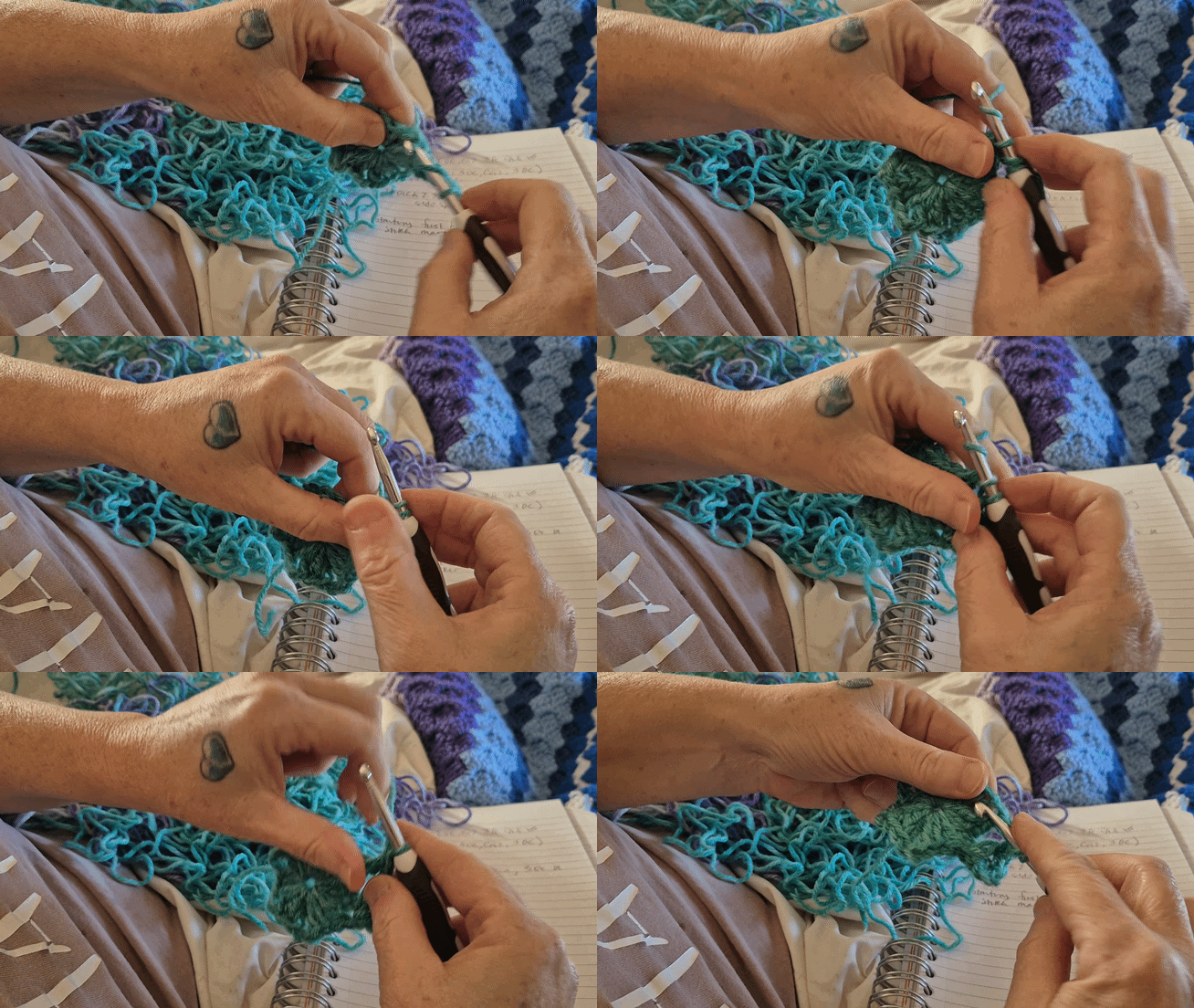
What Is Covered
Getting to Know the Double Crochet
What the abbreviation DC means in crochet patterns.
How the double crochet differs from the single crochet and half double crochet.
The anatomy of a completed double crochet stitch and what it should look like.
Working the Stitch
Yarn over before inserting your hook into the next stitch.
Inserting the hook into the next stitch.
Pulling up a loop so you have three loops on your hook.
Yarn over and pull through the first two loops.
Yarn over again and pull through the remaining two loops.
Building Consistent Tension
Keeping your yarn overs loose enough to work comfortably.
Making each stitch the same height.
Finding a steady rhythm that creates even, consistent rows.
Turning Your Work
How to begin a new row with the appropriate turning chain.
Finding the first stitch of the new row.
Keeping your edges neat and straight.
Counting Your Stitches
Identifying the top "V" of each half double crochet.
Counting stitches at the end of every row.
Using stitch markers if needed to help keep track of the first and last stitches.
Common Beginner Challenges
Forgetting the first yarn over.
Pulling through all three loops at once instead of two loops at a time.
Missing the first or last stitch in the row.
Uneven stitch height caused by inconsistent tension.
Beginner Crochet Live Series
✅ Lesson 1: Grip, Slip Knot & Foundation Chain (Current Lesson)
✅ Lesson 2: Single Crochet
✅ Lesson 3: Half Double Crochet
✅Lesson 4: Double Crochet
⬜ Lesson 5: Half Double Crochet Increase & Decrease
⬜ Lesson 6: Double Crochet Increase & Decrease
⬜ Lesson 7: Reading Crochet Patterns
⬜ Lesson 8: Stitch Markers & Counting Stitches
⬜ Lesson 9: Crochet in the Round
⬜ Lesson 10: Your First Granny Square
⬜ Lesson 11: Joining Granny Squares
⬜ Lesson 12: Finishing Techniques.
Practice for This Week
Practice crocheting a small swatch using only double crochet.
As you practice, focus on:
Creating even, consistent stitches.
Keeping the same stitch count in every row.
Maintaining straight edges.
Remembering to yarn over before beginning each stitch.
Developing a smooth rhythm by pulling through two loops at a time.
Remember, every new stitch takes a little practice. Don't worry if it feels awkward at first. The double crochet has a few more steps than the stitches you've learned so far, but each row will help build your confidence. Before long, the double crochet will become one of your most-used stitches and open the door to countless patterns and projects.
Watch the Video
If you would like to practice along, you can watch the full replay here.
Keep Going
Learning crochet isn't about being perfect—it's about showing up, practicing, and enjoying the journey.
The double crochet is one of those stitches you'll return to again and again, so don't be afraid to frog a few rows while you're learning. Every stitch brings you one step closer to creating the projects you've been dreaming about.
I'm so glad you're learning alongside me, and I can't wait to see your progress. Be sure to share a photo of your practice chains in The Hook Nook Community or leave a comment below. I'd love to cheer you on!
Happy crocheting!
🧶 Melissa
Naturally, MelissaMade
Beginner Basics Release: SC& HDC Increase (inc) & Decrease (dec)
July 28, 2026
As your crochet skills grow, it's time to learn how to shape your projects!
This week in our Beginner Crochet series, we explored increases and decreases using both the single crochet (sc) and half double crochet (hdc) stitches. These simple techniques allow you to add or remove stitches, creating curves, corners, and shaping for everything from plushies and hats to garments and home décor.
Don't worry if it takes a little practice to spot where your increases and decreases belong. With repetition, they'll quickly become a natural part of your crochet toolkit.
What Is Covered
Getting to Know the increase and decrease
We learned how increases and decreases change the shape of your crochet.
An increase adds stitches by working two stitches into the same stitch, making your project wider or more rounded.
A decrease combines two stitches into one, reducing your stitch count and helping create shaping.
We practiced these techniques using both single crochet and half double crochet.
Working the Stitch
Single Crochet Increase (sc inc)
Working two single crochet stitches into the same stitch.
Identifying where increases belong in a pattern.
Counting stitches after completing a row.
Single Crochet Decrease (sc dec)
Inserting your hook into two stitches before completing one single crochet.
Keeping decreases neat and nearly invisible.
Maintaining an even stitch count.
Half Double Crochet Increase (hdc inc)
Working two half double crochet stitches into the same stitch.
Keeping yarn overs consistent.
Maintaining even stitch height.
Half Double Crochet Decrease (hdc dec)
Beginning each stitch with a yarn over.
Combining two stitches into one half double crochet decrease.
Completing the decrease smoothly while maintaining tension.
Building Consistent Tension
As you practice, focus on:
Keeping your stitch size even throughout each row.
Counting your stitches after every increase or decrease row.
Watching your tension so shaping stays smooth.
Working slowly until the movements become comfortable.
Reading your crochet
As your projects begin to take shape, practice identifying:
Where increases create extra stitches.
Where decreases combine stitches.
How shaping changes the overall look of your project.
The top "V" of each completed stitch.
Counting Your Stitches
Identifying the top "V" of each half double crochet.
Counting stitches at the end of every row.
Using stitch markers if needed to help keep track of the first and last stitches.
Common Beginner Challenges
Forgetting to place two stitches into the same stitch for an increase.
Accidentally increasing when a pattern calls for a regular stitch.
Missing one of the stitches during a decrease.
Losing track of the stitch count.
Uneven shaping caused by inconsistent tension.
Beginner Crochet Live Series
✅ Lesson 1: Grip, Slip Knot & Foundation Chain (Current Lesson)
✅ Lesson 2: Single Crochet
✅ Lesson 3: Half Double Crochet
✅Lesson 4: Double Crochet
✅ Lesson 5: SC & HDC Increase & Decrease
⬜ Lesson 6: Double Crochet Increase & Decrease
⬜ Lesson 7: Reading Crochet Patterns
⬜ Lesson 8: Stitch Markers & Counting Stitches
⬜ Lesson 9: Crochet in the Round
⬜ Lesson 10: Your First Granny Square
⬜ Lesson 11: Joining Granny Squares
⬜ Lesson 12: Finishing Techniques.
Practice for This Week
Practice crocheting a small swatch using both increases and decreases.
As you practice, focus on:
Working accurate increases without adding extra stitches.
Making neat, smooth decreases.
Counting your stitches after every row.
Watching how your fabric changes shape.
Remember, increases and decreases may feel tricky at first, but they are simply building on the stitches you already know. As your confidence grows, you'll discover that these techniques make it possible to crochet everything from circles and amigurumi to garments and beautifully shaped accessories.
Watch the Video
If you would like to practice along, you can watch the full replay here.
Keep Going
Every new technique expands what you can create.
By learning increases and decreases, you've taken another exciting step toward making more advanced crochet projects. Keep practicing, be patient with yourself, and remember that every stitch is building confidence for the next adventure.
I'm so glad you're learning alongside me, and I can't wait to see your progress. Be sure to share a photo of your practice chains in The Hook Nook Community or leave a comment below. I'd love to cheer you on!
Happy crocheting!
🧶 Melissa
Naturally, MelissaMade
Beginner Basics Release: DC Increase (inc) & Decrease (dec)
August 4, 2026
Congratulations! You're ready to take another exciting step in your crochet journey by learning how to shape your work using double crochet increases and decreases.
These techniques allow you to make your projects wider, narrower, or beautifully curved. Whether you're creating garments, blankets, granny squares, or decorative pieces, understanding how to increase and decrease with double crochet is an essential skill you'll use again and again.
Don't be discouraged if these techniques take a little extra practice. With patience and repetition, they'll soon become second nature.
What Is Covered
Getting to Know the increase and decrease
Understanding Double Crochet Increases & Decreases
We learned how increases and decreases affect the shape of a crochet project.
A double crochet increase (dc inc) adds stitches by working two double crochets into the same stitch, making your project wider.
A double crochet decrease (dc dec) combines two stitches into one, reducing your stitch count and helping shape your work.
Working the Stitch
Double Crochet Increase (dc inc)
Yarn over and begin a regular double crochet.
Complete one double crochet stitch.
Work a second double crochet into the same stitch.
Count your stitches to ensure the increase was completed correctly.
Double Crochet Decrease (dc dec)
Yarn over and begin the first double crochet without finishing it.
Begin the second double crochet in the next stitch, also leaving it unfinished.
Yarn over and pull through all remaining loops to complete one decrease.
Maintain even tension so the decrease lays neatly within your work.
Building Consistent Tension
As you practice, focus on:
Keeping your yarn overs loose and consistent.
Making each stitch the same height.
Watching your tension during decreases so they don't become bulky.
Counting your stitches after every increase or decrease row.
Reading your crochet
As your projects begin to take shape, practice identifying:
Where increases create two stitches from one.
Where decreases combine two stitches into one.
How shaping changes the direction and appearance of your fabric.
The top "V" of every completed double crochet.
Counting Your Stitches
Identifying the top "V" of each double crochet.
Counting stitches at the end of every row.
Using stitch markers if needed to help keep track of the first and last stitches.
Common Beginner Challenges
Forgetting to work two double crochets into the same stitch for an increase.
Completing a decrease as two separate stitches instead of one.
Missing a stitch before or after a decrease.
Losing track of the stitch count.
Uneven stitch height caused by inconsistent yarn overs or tension.
Beginner Crochet Live Series
✅ Grip, Slip Knot & Foundation Chain
✅ Single Crochet
✅ Half Double Crochet
✅ Double Crochet
✅ Single Crochet & Half Double Crochet Increase & Decrease
✅ Double Crochet Increase & Decrease (Current Lesson)
⬜ Reading Crochet Patterns
⬜ Stitch Markers & Counting Stitches
⬜ Crochet in the Round
⬜ Your First Granny Square
⬜ Joining Granny Squares
⬜ Finishing Techniques
Practice for This Week
Practice crocheting a small swatch using both double crochet increases and double crochet decreases.
As you practice, focus on:
Making smooth, even increases.
Creating neat decreases without gaps.
Counting your stitches after every row.
Watching how increases and decreases change the shape of your fabric.
Remember, shaping is simply another way of using the stitches you already know. The more you practice increases and decreases, the more confident you'll become creating garments, blankets, granny squares, and other beautifully shaped crochet projects.
Watch the Video
If you would like to practice along, you can watch the full replay here.
Keep Going
Every new technique gives you more creative freedom.
By mastering double crochet increases and decreases, you've added another valuable skill to your crochet toolbox. Keep practicing, enjoy the learning process, and remember that every stitch brings you one step closer to creating projects you'll be proud of.
I'm so glad you're learning alongside me, and I can't wait to see your progress. Be sure to share a photo of your practice chains in The Hook Nook Community or leave a comment below. I'd love to cheer you on!
Happy crocheting!
🧶 Melissa
Naturally, MelissaMade
Beginner Crochet Release: The Basics of Reading Crochet Patterns
August 4, 2026
Crochet patterns can look like a completely different language when you're first starting out—but they don't have to be intimidating.
This week in our Beginner Crochet series, we learned the fundamentals of reading crochet patterns. Once you understand the common abbreviations, stitch counts, and how patterns are organized, you'll be able to follow along with confidence and open the door to thousands of crochet projects.
Remember, reading a pattern is a skill that improves with practice. The more patterns you read, the more familiar they become.
What Is Covered
Understanding the Parts of a Crochet Pattern
We learned how most crochet patterns are organized and what information to look for before making the first stitch.
This included:
The materials and supplies list.
Hook size and yarn recommendations.
Stitch abbreviations and special stitches.
Gauge information and when it matters.
Pattern notes and special instructions.
Taking a few minutes to read through the pattern before you begin can save a lot of frustration later.
Understanding Crochet Abbreviations
We reviewed many of the common abbreviations you'll see in beginner patterns, including:
ch – Chain
sl st – Slip Stitch
sc – Single Crochet
hdc – Half Double Crochet
dc – Double Crochet
inc – Increase
dec – Decrease
st – Stitch
sp – Space
Learning these abbreviations helps crochet patterns become much easier to understand.
Reading a Pattern Step by Step
As you work through a pattern, remember to:
Read one row completely before you begin crocheting.
Watch for repeated instructions.
Pay attention to stitch counts at the end of each row.
Read pattern notes before starting a new section.
Crocheting one step at a time makes patterns much less overwhelming.
Understanding Symbols & Repeats
We also discussed how patterns use punctuation and symbols to organize instructions.
These may include:
Parentheses ( ) for grouping stitches.
Asterisks * * for repeated sections.
Brackets [ ] in some patterns.
Commas separating individual steps.
Understanding these symbols helps you recognize repeating sections quickly.
Common Beginner Challenges
Skipping over important pattern notes.
Confusing abbreviations.
Forgetting to count stitches.
Reading ahead and accidentally skipping instructions.
Feeling overwhelmed by longer rows.
Remember, every experienced crocheter once had to learn how to read patterns, too.
Beginner Crochet Live Series
✅ Grip, Slip Knot & Foundation Chain
✅ Single Crochet
✅ Half Double Crochet
✅ Double Crochet
✅ Single Crochet & Half Double Crochet Increase & Decrease
✅ Double Crochet Increase & Decrease
✅ Reading Crochet Patterns (Current Lesson)
⬜ Stitch Markers & Counting Stitches
⬜ Crochet in the Round
⬜ Your First Granny Square
⬜ Joining Granny Squares
⬜ Finishing Techniques
Practice for This Week
Choose a simple beginner-friendly pattern and practice reading it one row at a time.
As you practice, focus on:
Identifying the abbreviations before you begin.
Reading each row completely before crocheting.
Counting your stitches after every row.
Highlighting or checking off completed rows if it helps you stay organized.
The goal isn't to crochet quickly—it's to become comfortable understanding what the pattern is asking you to do.
Watch the Video
If you would like to practice along, you can watch the full replay here.
Keep Going
Every new technique gives you more creative freedom.
By mastering double crochet increases and decreases, you've added another valuable skill to your crochet toolbox. Keep practicing, enjoy the learning process, and remember that every stitch brings you one step closer to creating projects you'll be proud of.
I'm so glad you're learning alongside me, and I can't wait to see your progress. Be sure to share a photo of your practice chains in The Hook Nook Community or leave a comment below. I'd love to cheer you on!
Happy crocheting!
🧶 Melissa
Naturally, MelissaMade
Beginner Crochet Release: Stitch Markers and Counting Stitches
August 18, 2026
You know the basic stitches, but how do you make sure they actually stay where they're supposed to?
This week in our Beginner Crochet Basics series, we're talking about two simple skills that can save you a whole lot of frogging: using stitch markers and counting your stitches.
Keeping track of your stitches helps you catch mistakes early, maintain straight edges, and make sure your project matches the pattern you're following. And stitch markers? They're like little road signs for your crochet, helping you remember exactly where important stitches are.
What Is Covered
Getting to Know Stitch Markers
Stitch markers are small tools used to mark a specific place in your crochet so you can easily find it again.
We talked about:
What stitch markers are and why they're helpful.
Using a stitch marker to identify the first or last stitch of a row.
Marking important places within a crochet pattern.
Moving your stitch marker as you work.
Using a scrap of contrasting yarn or another removable marker if you don't have traditional stitch markers handy.
Counting Your Stitches
Learning to recognize and count your stitches is an important part of becoming a confident crocheter.
As we practice, we're focusing on:
Identifying the top "V" of each stitch.
Understanding that each completed "V" represents one stitch.
Counting stitches across a completed row.
Checking your stitch count before moving on to the next row.
Using stitch markers to make counting longer rows easier.
Keeping Your Edges Straight
If your crochet mysteriously keeps getting wider or narrower, your stitch count is one of the first things to check!
We talked about:
Finding the first stitch of a new row.
Recognizing the last stitch before turning.
Using stitch markers to keep track of those easy to miss edge stitches.
Counting each row to catch accidentally added or skipped stitches early.
Straight edges aren't about perfect tension alone. Sometimes you're simply losing or gaining a stitch along the way.
Reading Your Crochet
Instead of relying only on the number in your head, practice looking at the actual stitches in front of you.
Look for:
The top "V" of each stitch.
Where one stitch ends and the next begins.
Your first and last stitches.
The stitch currently holding your marker.
The more comfortable you become reading your crochet, the easier it will be to recognize when something doesn't look quite right.
Common Beginner Challenges
Accidentally skipping the first stitch of a row.
Missing the last stitch.
Adding an extra stitch along the edge.
Losing count halfway across a long row.
Counting the turning chain as a stitch when the pattern says not to, or not counting it when the pattern says to.
Forgetting to move your stitch marker as you continue working.
Remember, every experienced crocheter once had to learn how to read patterns, too.
Beginner Crochet Live Series
✅ Grip, Slip Knot & Foundation Chain
✅ Single Crochet
✅ Half Double Crochet
✅ Double Crochet
✅ Single Crochet & Half Double Crochet Increase & Decrease
✅ Double Crochet Increase & Decrease
✅ Reading Crochet Patterns
✅ Stitch Markers & Counting Stitches (Current Lesson)
⬜ Crochet in the Round
⬜ Your First Granny Square
⬜ Joining Granny Squares
⬜ Finishing Techniques
Practice for This Week
Practice crocheting a small swatch using one of the basic stitches you've already learned.
As you practice, focus on:
Placing a stitch marker in your first and last stitches.
Counting every stitch across the row.
Checking that your stitch count stays the same from row to row.
Looking for the top "V" instead of relying only on counting in your head.
Moving your stitch markers as you begin each new row.
Remember, stitch markers aren't just for beginners. They're a simple tool crocheters use at every skill level to keep track of their work. Building the habit of counting your stitches now can save you a whole lot of "Where did THAT stitch go?" later!
Watch the Video
Follow along with the full Stitch Markers & Counting Stitches lesson on YouTube and practice along with me at your own pace.
Watch the lesson here.
Keep Going
Learning the stitches is only one part of learning to crochet. Learning how to see, count, and keep track of those stitches is what helps you turn them into successful projects.
Don't worry if you're still stopping to count again...and again...and maybe one more time just to be sure. That's part of learning!
Every time you recognize a stitch on your own or catch a mistake before you've crocheted five more rows, you're building your crochet confidence.
I'm so glad you're learning alongside me, and I can't wait to see your progress. Be sure to share a photo of your practice chains in The Hook Nook Community or leave a comment below. I'd love to cheer you on!
Happy crocheting!
🧶 Melissa
Naturally, MelissaMade
Beginner Crochet Video Release: Crochet in the Round
August 25, 2026
So far, we've spent a lot of time crocheting back and forth in rows. This week, we're changing direction—or maybe getting rid of directions altogether!
In this week's Beginner Crochet Basics lesson, we're learning how to crochet in the round.
Crocheting in the round allows you to create circles and tubes instead of flat rows. It's the foundation for so many fun crochet projects, including hats, bags, baskets, coasters, granny squares, and of course, plenty of plushies!
It may feel a little different at first, especially when you're trying to figure out where one round ends and the next begins. That's where some of the skills we've already practiced—like counting stitches and using stitch markers—really start to come together.
What Is Covered
Getting to Know Crochet in the Round
When we crochet in the round, our stitches are worked around a center point rather than back and forth across rows.
We talked about:
How working in rounds differs from working in rows.
Recognizing the beginning and end of a round.
Why stitch counting becomes especially important when working in the round.
How increases help a flat circle grow.
Where you might see crocheting in the round used in future projects.
Starting Your Round
There are different ways to begin crocheting in the round, and it's helpful to become familiar with more than one.
We practiced:
Creating a magic ring as the center of our work.
Starting with a chain and joining to create a center ring.
Working the first stitches into the center.
Identifying the first stitch of the round.
Don't worry if the magic ring feels tricky at first! It's one of those techniques that often takes a little repetition before your hands figure out what they're supposed to be doing.
Joined Rounds vs. Continuous Rounds
Not every project works in the round the same way.
We talked about the difference between:
Joined rounds, where you finish the round by joining the last stitch to the beginning of the round.
Continuous rounds, where you simply continue crocheting into the next round without joining.
Continuous rounds are especially common when making amigurumi and plushies, while joined rounds are used in many other crochet projects.
Using Your Stitch Marker
Remember those stitch markers from our last lesson? This is where they really earn their place in your crochet bag!
When working in continuous rounds, a stitch marker can help you:
Identify the first stitch of the round.
Know when you've completed a full round.
Keep track of your stitch count.
Avoid accidentally adding or skipping stitches.
Move your marker into the first stitch each time you begin a new round.
Counting Your Stitches
Counting becomes especially important when crocheting in the round because you don't have the obvious beginning and ending points that you see when working in rows.
As you practice, focus on:
Counting your stitches at the end of every round.
Finding the top "V" of each stitch.
Checking that your stitch count matches the pattern.
Recognizing where increases have added stitches.
If your circle suddenly starts looking a little wonky, your stitch count is a great place to start troubleshooting.
Common Beginner Challenges
Losing track of where the round begins.
Forgetting to move the stitch marker.
Accidentally working into the slip stitch when using joined rounds.
Adding or missing stitches.
Struggling to keep the magic ring secure while working the first round.
Confusing joined rounds with continuous rounds.
These are all normal parts of learning a completely new way of working your crochet.
Beginner Crochet Live Series
✅ Grip, Slip Knot & Foundation Chain
✅ Single Crochet
✅ Half Double Crochet
✅ Double Crochet
✅ Single Crochet & Half Double Crochet Increase & Decrease
✅ Double Crochet Increase & Decrease
✅ Reading Crochet Patterns
✅ Stitch Markers & Counting Stitches
✅ Crochet in the Round (Current Lesson)
⬜ Your First Granny Square
⬜ Joining Granny Squares
⬜ Finishing Techniques
Practice for This Week
Practice making a small circle while working in the round.
As you practice, focus on:
Starting your center confidently.
Identifying the first stitch of every round.
Placing and moving your stitch marker.
Counting your stitches after each completed round.
Practicing increases and watching how they allow your circle to grow.
Don't worry about turning your practice piece into a finished project just yet. This week is about becoming comfortable with the process and learning to recognize what your stitches are doing.
And look at how many of your previous skills you're already putting together—stitches, increases, stitch markers, counting, and reading your crochet!
Watch the Video
Follow along with the full Crochet in the Round Beginner Basics lesson on YouTube and practice each step along with me.
Watch the lesson here.
Keep Going
Learning to crochet in the round is one of those moments when your crochet possibilities suddenly get a whole lot bigger.
You're no longer limited to working back and forth in straight rows. Now you can begin creating circles, tubes, hats, bags, baskets, plushies, and so much more.
If your first circle isn't perfectly round, that's okay. Keep practicing, keep counting, and keep that stitch marker close!
You're building these skills one stitch—and now one round—at a time.
Happy crocheting!eted five more rows, you're building your crochet confidence.
I'm so glad you're learning alongside me, and I can't wait to see your progress. Be sure to share a photo of your practice chains in The Hook Nook Community or leave a comment below. I'd love to cheer you on!
Happy crocheting!
🧶 Melissa
Naturally, MelissaMade
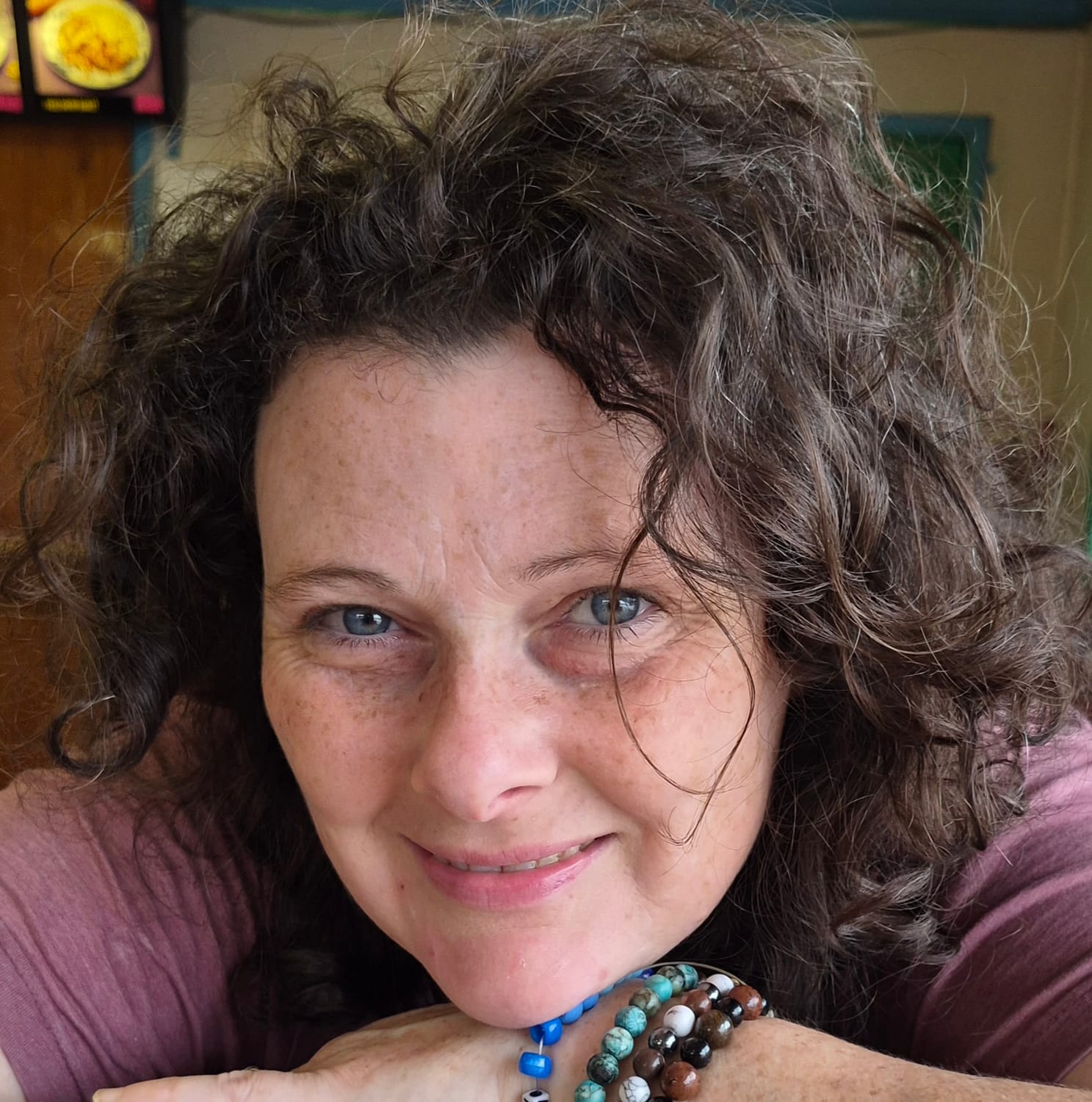
HEY, I’M MELISSA…
Hi, I'm Melissa—the creator behind Naturally, MelissaMade, founder of The Hook Nook, and dreamer of the Purple Peacock Bus.
As a homeschooling mom, homesteader, crochet educator, and handmade artisan, I've discovered the incredible power creativity has to bring peace, confidence, and connection.
What began as a simple hobby became my sanctuary, inspiring a business and community dedicated to helping others experience the therapeutic benefits of crochet one stitch at a time.



JOIN MY MAILING LIST
The Hook Nook Chronicles shares crochet tips, inspiration, community stories and creative growth.
912-655-3428
Newsletter
Subscribe now to get daily updates.